Samsung Semiconductor Accelerates R&D With Private, On-Prem AI Platform Powered by Open WebUI
Overview
How Samsung Semiconductor built a secure, self-hosted AI platform with Open WebUI to boost research and development efficiency, cutting workflows from days to hours.
At a Glance
- Users: 1,000 to 4,999 employees
- Region: United States (data residency enforced)
- Industry: Semiconductor
- Deployment: On-prem Kubernetes cluster
- Models: Internal LLMs + SLMs
- Time-to-deploy: 14-day pilot, full rollout in 30 days
- Adoption: 40% active use in first week, stabilized at 5-10% daily actives
- Key Results: 30% faster development cycles, seamless internal adoption
About Samsung Semiconductor Inc.
Samsung Semiconductor Inc. (SSI) delivers cutting-edge semiconductor solutions including DRAM, SSD, processors, and image sensors. With innovation at its core, the company supports global technology leaders and powers advancements across data centers, mobile devices, and AI systems.
The Challenge: Secure, Flexible AI at Scale
As teams across SSI began experimenting with generative AI tools, leadership identified a need for a self-hosted AI interface that balanced innovation with control.
The goal: provide employees a trusted environment to work with large language models (LLMs) without compromising data security or compliance.
Key Requirements
- Simple, reliable chatbot deployment
- Integration with internal Active Directory (SSO)
- Full audit trails and exportable logs
- Strict data residency and internal networking
- Control over plugin access and guardrails
SaaS-based AI tools offered speed but lacked flexibility and governance. SSI required a platform they could host, audit, and evolve, without vendor lock-in.
The Solution: Open WebUI on Kubernetes
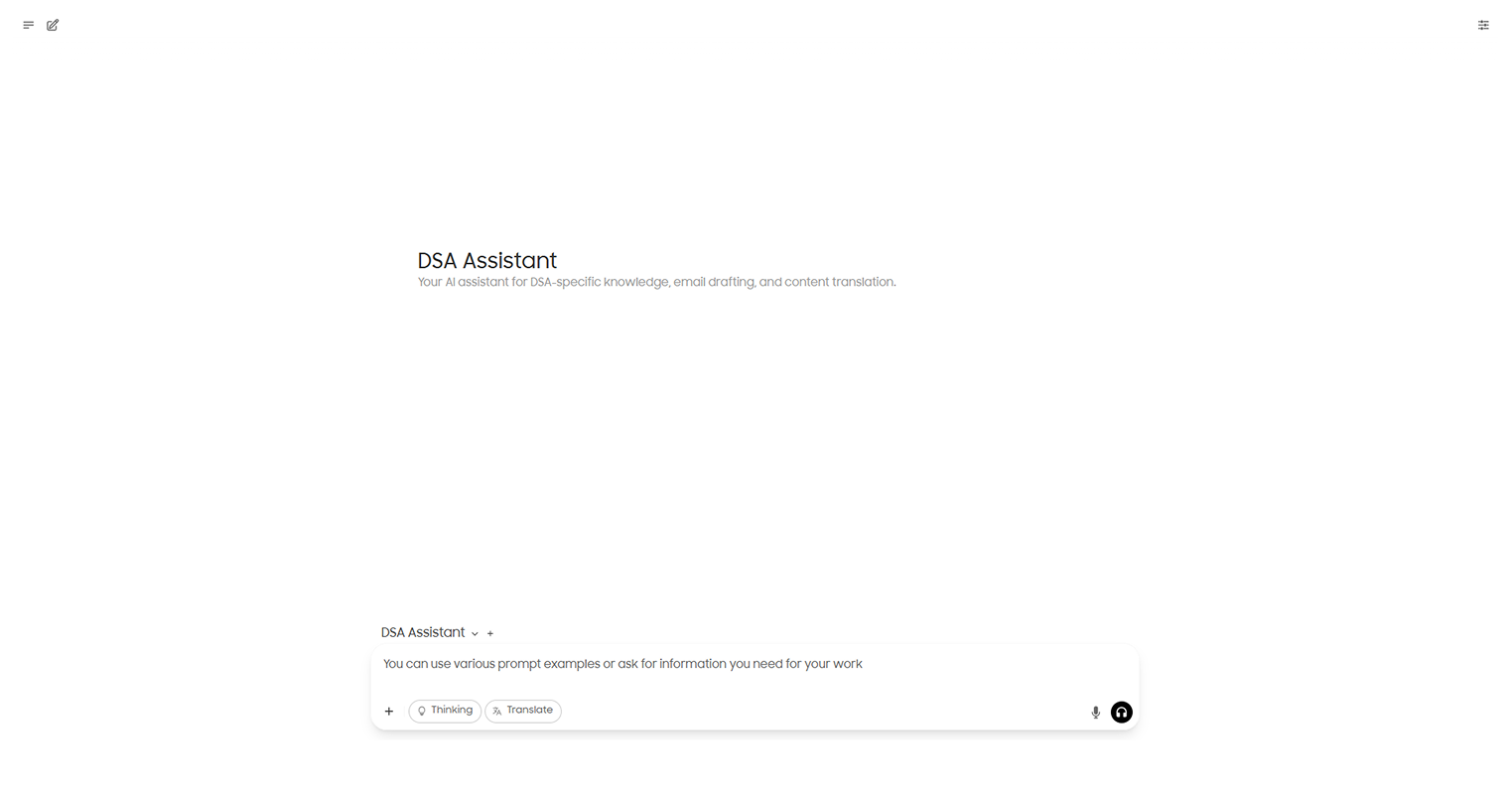
Open WebUI was selected for its open architecture, flexibility, and rapid proof-of-concept capabilities. Within two weeks, SSI’s AI/ML engineering team had a production-ready deployment running inside their secure on-prem Kubernetes cluster.
Architecture Highlights
- Compute / Orchestration: Internal orchestration on Kubernetes
- Storage / Database: Internal DB (encrypted and managed in-house)
- Networking: Fully internal network isolation
- Logging / Monitoring: SSI’s internal observability stack
- Security Controls: Data residency enforced; internal user access controls
“Open WebUI gave us control across security, models, and UX, without vendor lock-in.” Software Engineering, Samsung Semiconductor, Inc.
Adoption & Enablement
To ensure smooth adoption, SSI launched a 14-day pilot with 100 analysts. Following rapid success, Open WebUI was rolled out company-wide with two live training sessions and ongoing IT help desk support. Within 30 days:
- 80% of targeted staff had adopted the platform
- Daily active users stabilized at 5-10% of total employees
- R&D teams reported significant productivity improvements
“Open WebUI provides users with an environment similar to commercial tools, giving them a sense of familiarity, and at the same time, it has the advantage of improving usability with its simple and intuitive design.” AI/ML Engineering, Samsung Semiconductor, Inc.
Results: Speed, Adoption, and Control
01. Development Speed
R&D and software development teams reported development cycles shortened by an estimated 30%, accelerating iteration and innovation.
02. Adoption & Usability
Over 40% of employees became active users within the first week, citing simplicity and responsiveness.
03. Security & Compliance
- Private, on-premises deployment supported compliance with internal data residency requirements.
- Built-in access control and logging supported governance without slowing teams.
Why Samsung Chose Open WebUI
Open WebUI stood out as a strong fit, offering:
- Full control over models, data, and extensions
- Self-hosted flexibility with enterprise-grade UI
- Rapid deployment and minimal IT overhead
- High compatibility with existing AI applications
The platform empowered teams to collaborate confidently and securely, accelerating the path from idea to insight.
What’s Next
Samsung Semiconductor plans to continue expanding its AI infrastructure with Open WebUI, integrating additional internal models and optimizing RAG performance over proprietary research datasets.
Looking for an Enterprise Plan? Speak with Our Sales Team Today!
Get enhanced capabilities, including custom theming and branding, Service Level Agreement (SLA) support, Long-Term Support (LTS), and more!